
When everything turns upside down
The reality of recovering from emergency abdominal surgery

On Friday, the 12th of January, I went to bed with a tummy ache. I woke up on Saturday morning with less tummy ache and more abdominal pain. By lunchtime, the pain was so severe a trip to Accident and Emergency was on the cards. My husband, Andrew, drove me there and we waited. A couple of hours, and some methadone later, the doctor came back saying they were 95% certain I had appendicitis. And as it happens people don't really need their appendix, and they could whip that sucker out using keyhole surgery, and I would be back on my feet in two weeks.
Sadly, for me it turned out, I was in the 5% - no two-hour keyhole surgery and two-week recovery for me. Instead, I underwent a 5-hour open surgery with at least a 6 - 8 week recovery, a pretty spectacular scar to show for it and further surgery planned for later this year.
The purpose of this post is not to share my medical story but rather to share my reflections and learnings. As you can imagine, it has been a wild and shocking ride going from someone with a tummy ache to having a hidden disability literally overnight.
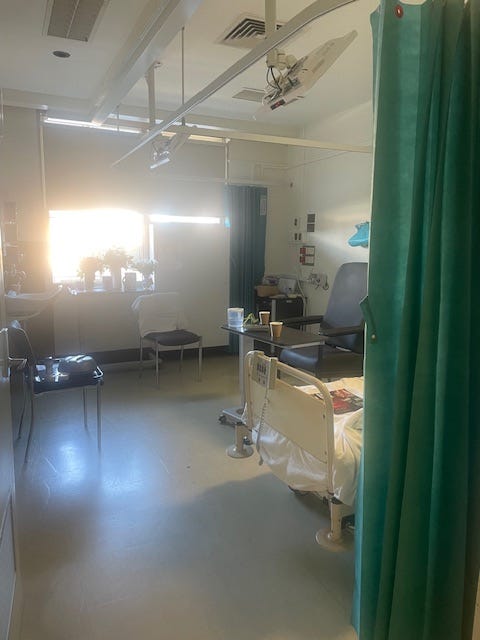
Emotional recovery has been much more challenging than physical recovery
Three days post-op, I began to understand precisely what had happened to me and how life would be very different from now on. In the hospital, surrounded by experts, the changes seemed very manageable, and with the support of my family, faith and close friends, I confidently thought, "I got this".
I did not "got this".
I only cried once in the hospital, but when I was home, I cried because I could not get dressed, wash my hair, or get in and out of bed without help (I am all good on those things now!). Well-meaning visitors would tell me how lucky I was, that if I had waited much longer to go to the hospital, things could have been much more serious - and on one level they were right.
However, I did not feel lucky. I felt like everything had been turned upside down and, some days, was hanging on by a thread.
Thankfully, I have a fabulous GP who spent just as much time talking about my mental health as she did my physical recovery. She referred me to a psychologist who has been bloody terrific. There is something about these circumstances and even our closest relationships that invites being a good patient. When faced with medical experts and loved ones with good intentions I found it hard to advocate for myself - being obedient and grateful became the norm - rather than saying how I really felt - often sad, scared and wondering what next.
All I can say is that for me, playing good patient didn't pay off. Having a space where I can just say things with no consequences and laugh at the ridiculousness of things in ways that can be hard with family and friends so I don’t offend their feelings has been a tremendous blessing.
It has been my first time working with a psychologist, and if I can, I will keep the relationship going as a way of maintaining my mental health as well as dealing with the odd curve ball that is bound to come.
Good health practitioners are worth their weight in gold
From the hospital’s check-in staff, triage nurses, on-call doctors, nurses, surgeons, specialist nurses, nutritionists, pain med teams, physios, and support staff, they were mostly brilliant. Everyone did their job, but the small things mattered most to me. Every nurse gave me pain medications at the right time, updated my records, and completed other technical medical tasks. However, almost all went above and beyond to ensure I was comfortable, fresh water was on hand, and on-call buttons were within reach before they left my room. They got to know my family and brought light to the darkest days. Nursing is a highly technical and specialised job, and it's not lost on me that nursing is also emotional labour. Having been a patient and seen nurses at work, it is no surprise that many nurses are leaving the profession. Nursing is inherently linked to patient outcomes and so recruiting, supporting and keeping nurses in the workforce seem like urgent questions to answer. I recently saw Adam Kay from This is Going to Hurt fame, he encouraged everyone in the audience to check in on the medical professionals in their lives, and, do it regularly because they are bound to keep saying they are fine. My experience was that the nurses did a terrific job.
All but one surgeon and doctor on rounds knew my case history and gave me time to ask the questions my medication fuddled brain could conjure. The one doctor who rocked up with the flashy smile and "I prefer it if patients tell me in their own words what happened", I see you, bro, and I know you didn't read my notes and was winging it.
Having been in the ICU for two weeks, I also know how busy you are and fully understand you might not have had time to read them. My advice is that honesty is always your best policy. Don't try to charm your way through - it just meant I didn't trust you and trust is important at times of experiencing vulnerability.
A massive shout-out also needs to go to my GP. When I turned up to an appointment, she had no idea what was about to land in her lap. I was crying so hard that my husband had to do all of the talking, and in 20 minutes, she picked up pain management, wound management, physiotherapy and booked me in for a more extended mental health chat. She helped broker my return to work and is helping me to prepare for the next surgery. One word - legend.
I went from seeing her for the odd cold and chest infection to being on first-name terms, and it has been a little bit of a mind meld for me. Coming from the UK, our culture is to avoid the doctor and protect the NHS's precious resources - I am starting to understand and appreciate the value of having a relationship with my GP and how it can benefit my health longer term.
Hidden disability is confusing
I want to be self-aware as I write about this. I am ten plus weeks into living with this label, and many other people are more experienced and better equipped to discuss the nuances than me and have much more complicated situations to manage.
On the other hand, my experiences are my experiences. I am sure they will continue to evolve and I want to understand and learn more about living with disability in Australia.
Firstly, I have found coming to terms with that label hard and have resisted it. I don't think of myself in these terms and I don’t want that narrative to dominate my life (my psychologist calls this post-traumatic growth!).
Then, there are times when the label is beneficial—for example, asking for the disabled toilets to be unlocked in a department store. Goodness knows why they are locked, but they often are. Either way, I resent having to ask or explain myself to use a bathroom, sit on seat on a a train or tram and more.
Someone also mentioned the Sunflower Lanyard and pin badge that can be worn to help others know I have a hidden disability. It's like the London Underground "Baby on Board" badges, that, ironically, I thought was a fabulous idea back in the day. But I do not want to wear a sunflower lanyard, badge, pin or anything else.
I don't fully understand my response to it. Partly, it is a "no one else's business" thing; it's also the designer in me thinking the world should be more equitable, and then I wouldn't need to ask for a key to the toilet in the first place. Plus, I feel incredibly guilty about the bazillion times I have not considered a person might have a hidden disability now I have experienced it myself. Throw a big bundle of denial into the mix and life can feel overwhelming.
The upshot is that it's all a bit confusing and I am trying to give myself some space and grace to think it through and land somewhere more comfortable for me. I am super keen to hear from others further on in this journey - if that’s you leave a comment :-)
Send the text, make the call, write the card or whatever
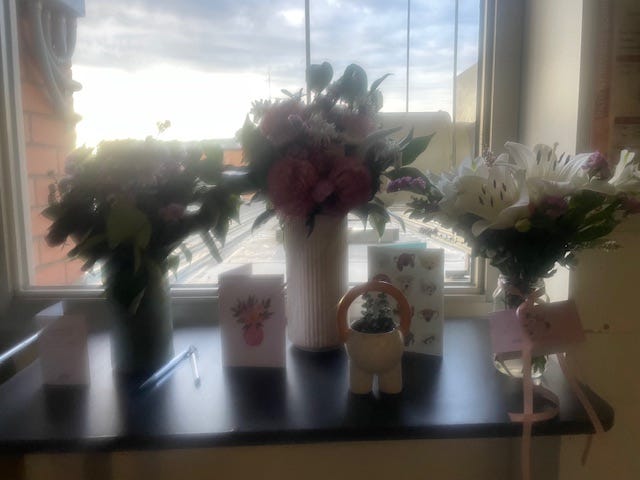
My emergency surgery happened on a Sunday, and it took until Monday afternoon for those nearest and dearest to me in Australia and the UK to find out what had happened. Then, of course, the news starts to spread a little further. On Tuesday morning the first bunch of flowers arrived. By Wednesday, there were four more, plus lots of text messages, get well cards, meals cooked for my family, gifts of book vouchers, beautiful hand cream, homegrown lemons and passion fruits, Uber Eats vouchers, phone calls (that I often did not answer but appreciated) and visits.
When it felt like my world was crashing down and I was alone in ICU for two weeks with just a handful of visitors, every single one of those contacts meant so much. I could not respond to all of them, but that did not mean I did not value everyone of them. My emotions swung from being "can people leave me alone to recover?" to spiralling into "my life is falling apart and no-one cares". Seeing the cards, the flowers, and the text messages slowed down that spiral - a lot.
If you are wondering whether to contact someone who is sick, grieving, or both, - I found it immensely helpful, comforting, and a great reminder of just how wonderful the people in my life are, and how grateful I am to have them.
I've learnt what a good leader and employer looks like in cases like this
Management consulting firms have had their fair share of bad press - some of it justified. My experience in these circumstances - has been excellent. From the moment my leadership team learned about what happened to me they have emphasised getting well rather than returning to work.
I have had one HR point of contact who has kept in touch just enough, and she has worked with me and my GP to develop a manageable return to work plan before I go off and have another surgery.
I have also missed my colleagues and clients - and have been able to use some "keep in touch" time to stay connected and have really appreciated how messages have stayed away from the detail of work and focussed on our relationship and some of the fun work chit chat stuff. Being off work for nearly four months (including the Christmas Holidays) can make returning to work seem challenging and intimidating but light regular contact has made a world of difference.
I have worked for some great small and mid-sized organisations but my family and I are grateful everyday for the way EY has supported me through this time. I am certain this would not have been the case at any of my previous employers. At least one of them didn’t even have an HR person to speak of let alone a process for managing this sort of situation, perhaps, sometimes size does matter.
What happens next?
For those interested in what happens next, I have recently had some positive test results and another surgery planned for either late June or early July. If all goes well - recovery will be one week in the hospital and another 4 - 6 weeks at home, meaning that this whole adventure will have taken 9 months from start to finish. I have returned to work part time this week and am looking forward to thinking about other things for a while.
If you have sent me a message, email or given a phone call that I have not returned I hope this goes someway to explaining what has been happening. Thank you to my friends, family, colleagues and clients who have been so understanding. I am sure there will be more reflections so please subscribe if you are interested in accompanying me along the way.
Kx